

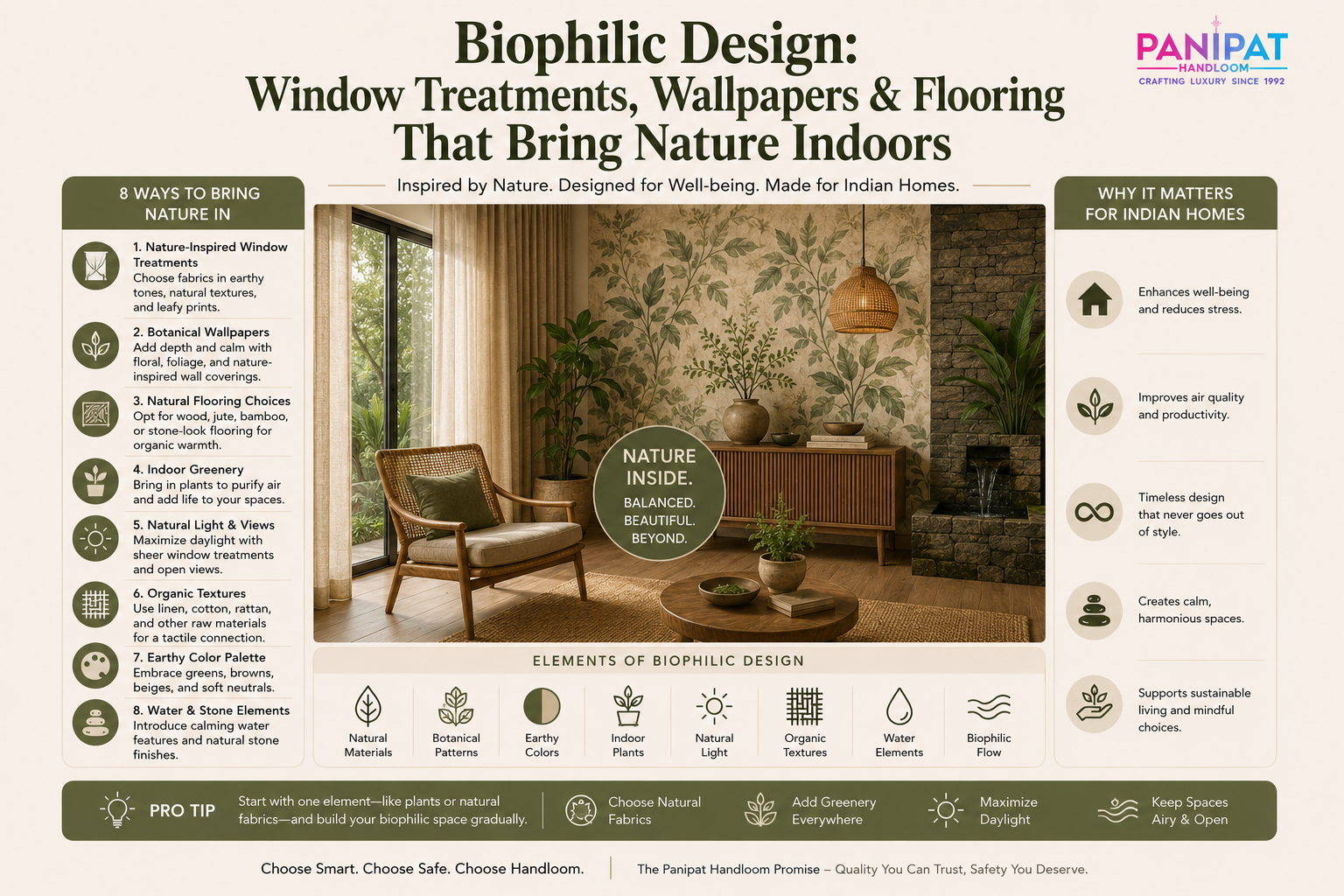
Biophilic design is the principle that human beings are happier, calmer and healthier in spaces that connect us to nature. Studies show biophilic interiors can reduce stress by up to 60 percent, improve cognitive function and support better sleep. In 2026 it has become one of the most-requested design briefs across our Delhi and Gurugram consultations, driven by post-pandemic wellness priorities, work-from-home routines and the simple fact that Indian summers, monsoons and pollution make connection to nature feel scarce in modern apartments.
The Panipat Handloom Interiors Team handles biophilic specifications across all three product pillars: window treatments, wallpapers and flooring. This guide breaks down what biophilic design means, why Indian homes adapt to it naturally and the specific product moves in each category that genuinely bring nature indoors.
What Biophilic Design Actually Is
The term comes from "biophilia", the idea introduced by biologist E.O. Wilson that humans have an innate need to connect with nature. In interior design, biophilic principles translate into a handful of direct and indirect experiences.
Direct nature. Plants, sunlight, fresh air, water, views of greenery. The strongest biophilic moves come from real nature in the space.
Natural materials. Wood, stone, bamboo, cotton, wool, linen, cane, jute, terracotta. Materials that came from a tree or a quarry rather than a factory.
Natural patterns and forms. Biomorphic shapes (curves, organic outlines), botanical motifs, light and shadow play that mimics dappled sun under trees.
Spatial qualities. Prospect (open views), refuge (cocooned nooks), mystery (partial glimpses). Spaces that mimic how humans evolved to feel safe in nature.
Practitioners describe biophilic design as "atmosphere designed to restore" rather than just decorate.
Why It Matters in Indian Homes
Indian homes have practised biophilic design for centuries without naming it. Traditional havelis built around central courtyards. Verandahs that mediate between indoor and outdoor. Jharokhas (carved window screens) that filter dappled light. Mud-and-lime walls that breathe with the seasons. Tulsi planters at the entrance. Cane and jute as the default summer furniture.
Modern Indian apartments often lose these connections. Tile floors, glass without filtering layers, concrete walls and synthetic furnishings strip out exactly the elements traditional Indian homes balanced naturally. Biophilic design in 2026 is less about importing a new idea and more about restoring what apartment living removed.
Window Treatments That Bring Nature Indoors
Windows are where the indoor-outdoor relationship lives or dies. The right window treatment maximises natural light while filtering the harshest part of Indian sun, allows views outside without compromising privacy and uses fabrics that themselves connect to nature.
Linen and cotton sheers. The sheer fabric range covers the inner-layer translucent options. Sheer linen filters strong Indian afternoon sun the way leaves filter sun under a tree, creating the dappled-light effect biophilic design calls for.
Linen and natural cotton outer curtains. Heavier weights for night closure and privacy. The Panipat curtain linen fabric range and linen fabric collection deliver the matt natural texture biophilic specifications need. Avoid shiny synthetics and blackout polyesters.
Bamboo and wood blinds where curtains aren't ideal. Kitchens, bathrooms and balcony doors handle wood and bamboo better than fabric. The natural material itself adds biophilic character.
Earth-tone palettes. Soft greens, oat beige, sand, muted clay, mushroom and warm white photograph as neutral but feel like landscape. Skip stark white and saturated colours.
Wallpapers That Bring Nature Indoors
Wallpapers do more work in biophilic design than most categories. The right pattern or texture can shift an entire room toward feeling nature-connected without requiring real plants or open windows.
Botanical and floral prints. William Morris designs are the original biophilic wallpapers and remain a benchmark. The Morris & Co wallpapers collection covers the originals. GP & J Baker and Cole & Son wallpapers carry larger-scale botanical and tropical patterns that work in living rooms and bedrooms. The 1838 Wallcoverings collection covers heritage British florals that fit biophilic specifications without going overly literal.
Grasscloth and natural fibre wallpapers. Linen-look, paper-weave and grasscloth wallpapers add tactile nature without imagery. They pair well with botanical accent walls elsewhere.
Landscape and forest murals. Single-wall floor-to-ceiling murals of forests, mountains or water work in feature spaces (dining areas, behind beds, in entryways). The designer wallpaper range and customise wallpapers service cover mural specifications for Indian homes.
Avoid abstract geometric patterns, glossy finishes and metallic backgrounds. They work against biophilic intent.
Flooring That Brings Nature Indoors
Floors cover more surface area than any other element in a room. Their material story sets the biophilic tone before any other choice.
Engineered wood flooring. The most practical biophilic floor for Indian apartments. Handles humidity better than solid hardwood and delivers the wood-grain visual that connects floors to nature. The engineered wooden flooring range covers light oak, white oak and walnut tones suitable for different biophilic palettes.
Solid hardwood flooring. For villas and ground-floor homes where humidity stability is manageable. The hard wood flooring range shows visible grain that biophilic specifications require.
Bamboo flooring. Particularly biophilic because bamboo grows fast and sustainably, making it the eco-friendly natural choice. The bamboo flooring range suits Indian climate well and adds a softer warmer tone than oak.
Natural fibre rugs. For tile-floor homes where wood replacement isn't feasible, large jute, sisal or wool rugs in earthy tones bridge the visual gap. The rugs and flooring section covers options sized for biophilic-style room layouts.
Avoid printed wood-look laminates, glossy tiles and synthetic carpet. They photograph as wood and feel as plastic.
Beyond the Big Three: Extending Biophilic Design
The window treatment, wallpaper and flooring choices set the foundation. Three more moves complete the look.
Wall panels in natural materials. The rattan cane range, bamboo charcoal veneer and thermo pine cladding panels cover wall treatment options that extend the biophilic story tactically.
Real plants. One large statement plant (fiddle leaf fig, monstera, areca palm) beats five small ones. Tulsi at the entrance is a culturally rooted biophilic touch. If maintenance is impossible, the artificial plants range and artificial bonsai range work as compromise options.
Natural light maximisation. Light-filtering window treatments paired with mirrors placed to bounce daylight deeper into rooms. Skylights where architecture allows. The goal is dynamic light that changes through the day.
Common Mistakes
Treating biophilic design as just adding plants. Plants are one of many elements. A room with twelve potted plants and synthetic everything else isn't biophilic.
Overdoing botanical patterns. Florals on wallpaper, curtains, cushions and rugs together creates noise. Pick one biophilic-pattern surface and keep the rest natural-textured but plain.
Choosing wood-look imitations. Printed laminates and wood-effect tiles read as fake on close inspection. Real wood (even engineered) carries the biophilic charge that imitations cannot.
Forgetting natural light. Heavy blackout curtains permanently drawn defeat the biophilic intent. Use layered window treatments instead.
Ignoring scent and sound. A room with the right materials but stale air or harsh acoustics misses two of biophilic design's sensory channels.
Key Takeaways
Biophilic design connects interiors to nature through natural materials, plants, sunlight, organic patterns and spatial qualities that restore rather than just decorate. Indian homes have practised biophilic principles for centuries through verandahs, jharokhas, cane furniture and traditional materials. Modern Indian apartments lose these connections but can restore them through targeted choices. Window treatments: linen and cotton sheers plus natural fabric curtains. Wallpapers: botanical prints (Morris, Cole & Son, 1838) or grasscloth textures. Flooring: engineered or solid wood, bamboo, or large natural fibre rugs over existing tile. Avoid synthetic imitations, glossy finishes and over-blocking natural light.
The Final Word
Biophilic design works in Indian homes because Indian homes were biophilic before the word existed. Verandahs that catch breeze. Courtyards that frame sky. Cane furniture that breathes. Cotton curtains that dance with afternoon air. Modern apartments stripped most of these out because tile floors and glass walls were faster to build and easier to clean. Biophilic design just brings them back deliberately. Less about importing a Pinterest aesthetic, more about restoring what Indian homes already knew.
The Panipat Handloom Interiors Team handles fabric, panel, flooring and wall treatment specifications for biophilic homes across Delhi NCR. Walk in to our N-14 South Extension Part 1 store in New Delhi or the Dharam Plaza store in Sector 62 Gurugram for sample mood boards covering all three categories.
Frequently Asked Questions
Q: What is biophilic design in simple terms?
Biophilic design is the practice of bringing nature into interior spaces through natural materials, plants, daylight, organic shapes and patterns. The goal is to restore the connection between people and nature that modern indoor living often disrupts. Studies show biophilic interiors reduce stress, improve cognitive function and support better sleep.
Q: How is biophilic design different from just adding plants?
Plants are one element of biophilic design but not the whole. True biophilic design includes natural materials (wood, stone, linen, jute), maximised daylight, organic shapes and patterns, views of nature where possible and natural textures across multiple surfaces. A room with many plants but synthetic everything else is not biophilic.
Q: What are the best window treatments for biophilic design?
Layered window treatments that maximise daylight while filtering it. Inner layer of linen or cotton sheers filters strong Indian sun the way leaves filter sunlight under a tree. Outer layer of heavier linen or cotton curtains for night privacy. Avoid blackout synthetics and shiny polyesters which work against biophilic intent.
Q: Which wallpaper patterns are best for biophilic design?
Botanical and floral patterns are the classic biophilic wallpapers. William Morris designs are the original benchmark. Tropical leaf prints, landscape murals and grasscloth textures all work. Avoid abstract geometric patterns, metallic backgrounds and glossy finishes which work against biophilic intent.
Q: What flooring works best for biophilic homes in India?
Engineered wood flooring handles Indian humidity well and offers the wood-grain look biophilic design needs. Bamboo flooring is particularly biophilic because bamboo is sustainable and renewable. For homes where wood replacement isn't feasible, large jute, sisal or wool rugs in earthy tones bridge the visual gap over tile floors.
Contact for site visit and quote:
- Delhi store: N-14, South Extension Part 1, New Delhi-110049
- Gurugram store: Shop No 3, Plot No 101A, First Floor, Left Side, Dharam Plaza, Brahma City, Sector-62, Gurugram, Haryana-122101
Phone: +91-9899073000, +91-9999999009