

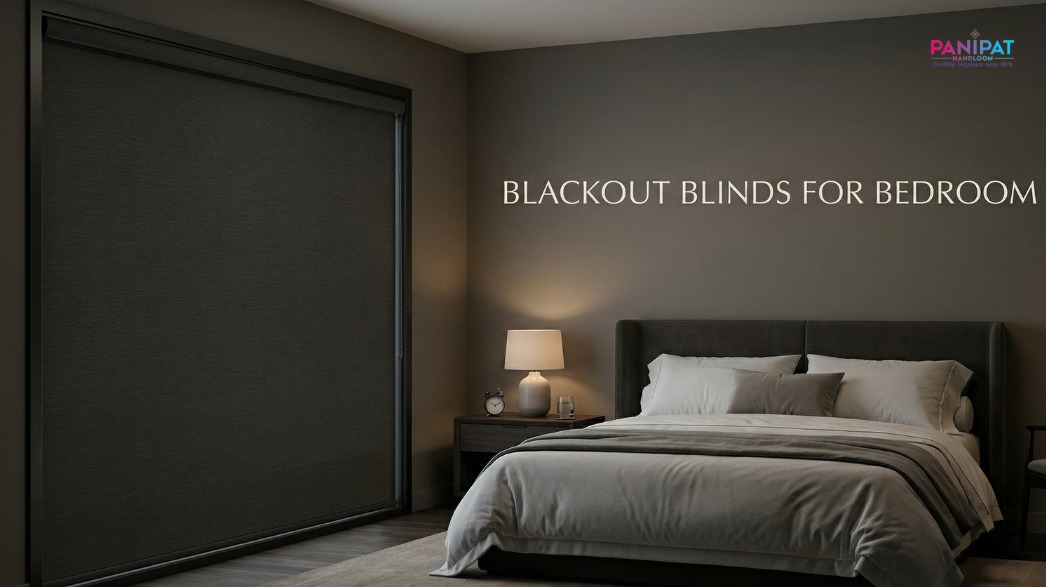
Blackout Blinds for Bedroom: Top Options to Block 100% Light
Sleep quality in Indian cities is increasingly compromised by light pollution — from street lamps, vehicle headlights, neon signage, and the glow of neighbouring high-rises that filter into bedrooms throughout the night. A proper blackout blind is no longer a luxury but a functional necessity for anyone who values deep, restorative sleep.
This guide covers every blackout blind option available for Indian bedrooms in 2026 — how they work, which products block the most light, what they cost in Delhi and Gurugram, and how to choose the right one for your window size and bedroom design.
What Makes a Blind 'Blackout'?
A blind is classified as blackout when its fabric blocks 99–100% of incoming light. This is achieved through one of three methods:
- Foam-backed fabric: A layer of polyurethane or acrylic foam is bonded to the back of the fabric, filling the tiny gaps in the weave that would otherwise allow light through.
- Triple-weave construction: Three layers of yarn are woven together — face yarn, a black yarn centre layer, and backing yarn — creating a dense fabric that blocks light without any coating.
- Aluminium-coated backing: A metallic coating on the back of the fabric reflects light rather than absorbing it. This also provides thermal insulation benefits.
True blackout fabric blocks 99–100% of light through the fabric panel itself. However, light can still enter around the edges of the blind (between the blind and the window frame). For complete room darkness, side channels or a recessed installation is recommended.
Types of Blackout Blinds for Bedrooms
Blackout Roller Blinds
The most widely used blackout solution for Indian bedrooms. A single panel of foam-backed or triple-weave blackout fabric rolls onto a tube. When fully lowered, the flat panel covers the window completely. Key advantages: widest fabric colour range (50+ options), lowest cost entry point, easiest to clean, most durable mechanism. A blackout roller blind with side channels provides the closest to total darkness achievable with any blind product.
Zebra Blackout Blinds
A variation of the zebra (dual roller) blind where both the opaque and sheer strips are replaced with blackout-grade fabric. This gives the layered aesthetic of a zebra blind while providing near-complete light blocking when fully closed. Slightly more expensive than a standard blackout roller blind, and not quite as effective at total blackout due to the strip alignment mechanism, but a popular choice for homeowners who want the zebra look in the bedroom.
Blackout Roman Blinds
A Roman blind with a blackout interlining sewn between the face fabric and the backing fabric. Provides an elegant, fabric-rich aesthetic while achieving 90–95% light blockage. Slightly less effective than a roller blackout blind at the edges due to the fold mechanism, but significantly more decorative. Suited to master bedrooms where aesthetics are as important as function.
Blackout Blind Comparison Table
|
Feature |
Blackout Roller |
Zebra Blackout |
Blackout Roman |
|---|---|---|---|
|
Light Blocking |
99–100% (with side channels) |
90–95% |
90–95% |
|
Starting Price Delhi |
Rs. 65–90 per sq.ft |
Rs. 110–150 per sq.ft |
Rs. 140–200 per sq.ft |
|
Aesthetics |
Clean, minimal |
Layered, modern |
Elegant, fabric-rich |
|
Fabric Colour Range |
50+ options |
30–50 options |
Any fabric + blackout lining |
|
Cleaning |
Wipe with damp cloth |
Gentle vacuum |
Dry clean recommended |
|
Motorisation |
Available from Rs. 2,500 |
Available from Rs. 4,000 |
Available from Rs. 4,500 |
|
Best For |
Total darkness, all budgets |
Bedroom with style priority |
Master bedroom, premium look |
|
Durability |
7–10 years |
5–8 years |
5–8 years (mechanism) |
The Importance of Side Channels for True Blackout
This is the most overlooked aspect of bedroom blackout blinds. Even the best blackout fabric will allow light to enter through the gaps between the blind edge and the window frame — typically 5–15 mm on each side and at the bottom. In a darkened room, these gaps create noticeable light lines that can disrupt sleep.
Side channels (also called side rails or U-channels) are aluminium or PVC tracks that seal the edge of the blind against the window frame or wall. When combined with a quality blackout roller blind, side channels can achieve near-total room darkness — the benchmark is less than 1% light transmission into the room.
- Cassette housing: A box housing at the top of the blind that covers the rolled-up fabric and eliminates the top gap.
- Side channels: U-shaped tracks on each side of the window that the blind fabric slides into, sealing the side gaps.
- Bottom bar seal: A weighted bottom bar pressed against the window sill to eliminate the bottom gap.
Blackout Blind Prices — Delhi & Gurugram 2026
|
Product |
Economy |
Mid-Range |
Premium |
Notes |
|---|---|---|---|---|
|
Blackout Roller Blind |
Rs. 65–85/sq.ft |
Rs. 90–130/sq.ft |
Rs. 140–200/sq.ft |
Price per sq.ft including fabric + mechanism |
|
Side Channels (pair) |
Rs. 400–600 |
Rs. 600–900 |
Rs. 900–1,500 |
Per window; aluminium or PVC |
|
Cassette Housing |
Rs. 200–400 |
Rs. 400–700 |
Rs. 700–1,200 |
Adds clean look, conceals rolled fabric |
|
Zebra Blackout Blind |
Rs. 110–140/sq.ft |
Rs. 145–180/sq.ft |
Rs. 185–260/sq.ft |
Higher due to dual mechanism |
|
Motorised Add-on |
Rs. 2,500–3,500 |
Rs. 4,000–5,500 |
Rs. 5,500–8,000 |
Per blind; Wi-Fi motors at higher end |
Room-Wise Blackout Blind Recommendations
|
Room Type |
Recommended Product |
Key Reason |
|---|---|---|
|
Standard Bedroom |
Blackout Roller Blind + Side Channels |
Best light blocking at lowest cost |
|
Master Bedroom (Premium) |
Blackout Roman Blind or Zebra Blackout |
Aesthetic + function balance for luxury interiors with Sabyasachi wallpapers |
|
Baby / Nursery |
Motorised Blackout Roller Blind |
Cord-free safety + nap-time darkness |
|
Home Theatre / Media Room |
Blackout Roller Blind (blackest fabric available) |
Maximum light elimination |
|
Night-Shift Worker's Room |
Blackout Roller + Side Channels + Cassette |
Industrial-grade darkness needed |
|
Guest Bedroom |
Standard Blackout Roller Blind |
Cost-effective, practical choice |
Frequently Asked Questions
Q1. What is the difference between blackout and dimout blinds?
Blackout blinds block 99–100% of light through the fabric panel, making the room near-totally dark when the blind is lowered. Dimout blinds reduce light by 70–90%, creating a comfortable, low-light ambience without complete darkness. For bedrooms where sleep quality is the priority — especially for shift workers, young children, or anyone sensitive to morning light — blackout is always the right choice.
Q2. Do blackout blinds also reduce noise?
Standard blackout blinds do not provide significant noise reduction. However, the foam-backed or triple-weave fabrics used in blackout blinds do have some acoustic dampening properties — typically reducing sound by 3–6 decibels at the window surface. For meaningful noise reduction, cellular honeycomb blinds (which trap air in their structure) are more effective and can be combined with a blackout lining.
Q3. Can blackout blinds help reduce air conditioning costs?
Yes. Blackout blinds with aluminium-coated or foam-backed fabrics provide thermal insulation at the window surface — one of the primary pathways for heat gain in Indian homes. Closing blackout blinds during peak afternoon sun hours (12 PM–4 PM in Delhi summers) can reduce heat gain through the window by 30–40%, leading to meaningful reductions in air conditioning load and electricity bills.
Q4. Are blackout blinds available in light colours and stylish designs?
Yes. Contrary to the common assumption that blackout blinds must be dark coloured, blackout fabric is available in a wide range of colours including white, cream, beige, light grey, and pastels. The blackout backing is bonded to the back of the fabric and does not affect the front-facing colour. At Panipat Handloom, blackout roller blind fabrics are available in over 50 colours and 8–10 textures, along with customized blinds options.
Q5. How long do blackout blinds last in Indian conditions?
A quality blackout roller blind will last 7–10 years with regular use and basic cleaning. The foam backing or aluminium coating may gradually degrade in extreme heat conditions over 8–12 years, which can reduce the blackout effectiveness slightly. Avoiding direct sunlight exposure on the backing (when the blind is rolled up) extends the life of the blackout coating significantly.
RELATED READING
- Roller Blinds vs Zebra Blinds: Which Is Better for Indian Homes?
- Cellular Honeycomb Blinds: Best Energy-Saving Window Solution
- How to Choose the Right Blinds for Every Room in Your Home
- Motorized Blinds for Smart Homes: Complete Guide & Price Range
CONTACT THE PANIPAT HANDLOOM EMPORIUM
New Delhi: N-14, South Extension Part 1, New Delhi – 110049
Gurugram: Shop No. 3, Dharam Plaza, Brahma City, Sector-62, Gurugram – 122101
Phone: +91-9899073000 / +91-9999999009
Email: team@thepanipathandloom.com
Website: thepanipathandloom.com