

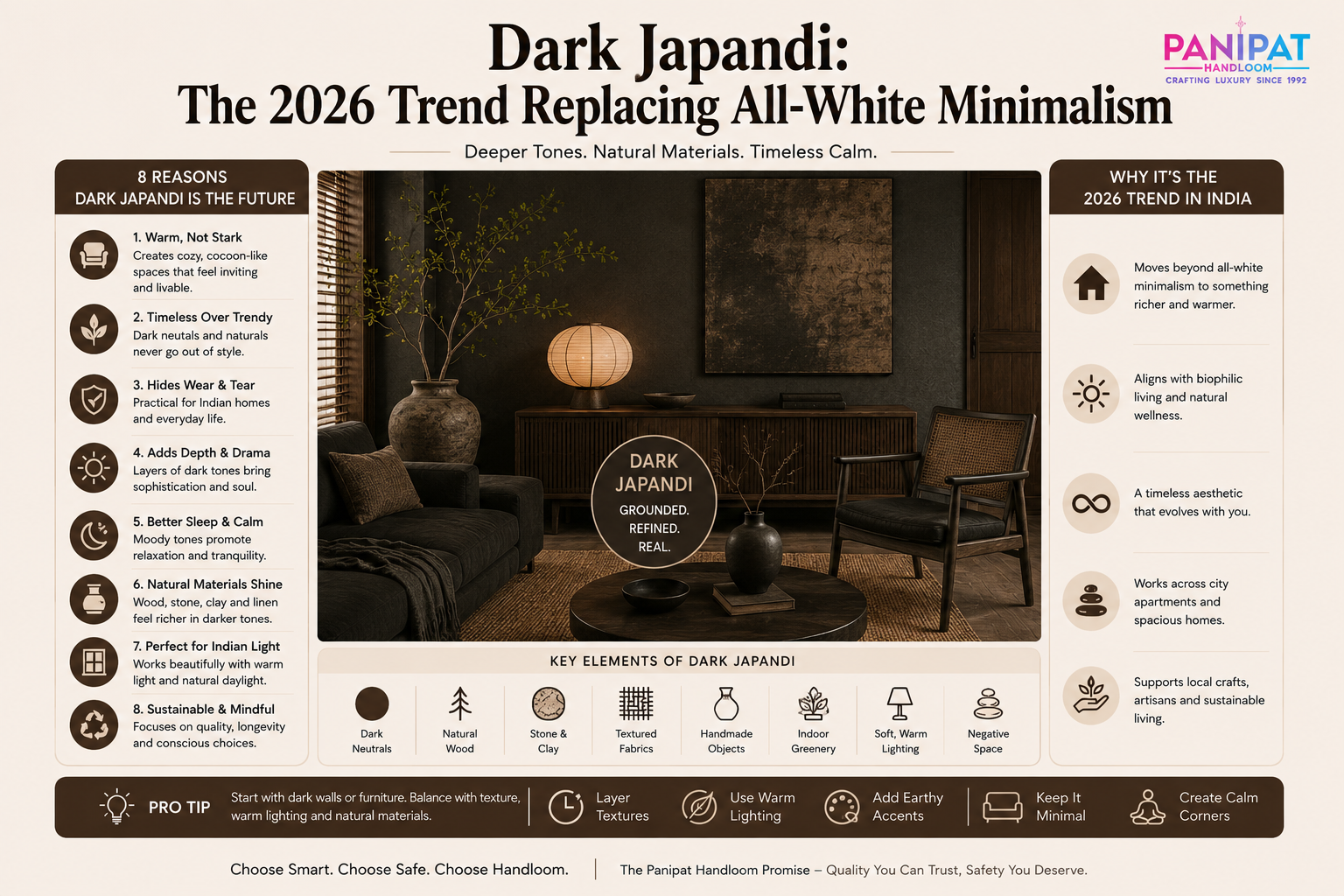
For the past five years Japandi has meant pale oak floors, off-white walls and linen drapes. In 2026 the style has matured into something darker and more atmospheric. Walnut replaces pale oak. Charcoal walls replace cream. The mood shifts from spa-bright to cinematic-warm. Design publications are calling it Dark Japandi. Some call it Moody Minimalism. It's the most-requested mood board across our Delhi and Gurugram consultations this year.
The Panipat Handloom Interiors Team has watched the shift accelerate from late 2025. People are tired of houses that look sterile in photographs. They want spaces that feel grounded, intimate and slightly mysterious. This guide breaks down what Dark Japandi is, how the palette works, why it suits Indian homes particularly well and the materials that make or break the look.
What Dark Japandi Actually Is
Dark Japandi is not a different style. It's Japandi's 2026 evolution. The core principles stay the same: clean lines, natural materials, functional minimalism, intentional decoration. Only the palette changes. Where classic Japandi leaned bright and airy, Dark Japandi leans deep and atmospheric. Designers describe it as "atmospheric minimalism": the idea that a room should feel something rather than just look something.
The shift is partly a reaction to years of glossy all-white interiors that photographed beautifully but lived coldly. It's partly a response to post-pandemic cocooning where homes are sanctuaries rather than stages. And it's partly the natural maturation of any design movement past its first phase.
The Dark Japandi Palette
The classic Japandi palette uses off-white, oat beige, soft taupe and pale oak. Dark Japandi shifts these tones two or three steps deeper.
|
Element |
Classic Japandi |
Dark Japandi |
|---|---|---|
|
Wall base |
Off-white, cream |
Plaster grey, mushroom, olive smoke |
|
Accent walls |
Pale oak slats |
Charcoal louvers, smoked oak panels |
|
Wood tone |
Light oak, ash |
Walnut, espresso, Shou Sugi Ban (burnt wood) |
|
Upholstery |
Linen oat, cream wool |
Deep olive, ink, plum dusk, rust |
|
Soft accents |
Pale jute, white ceramics |
Aged brass, charcoal stoneware |
|
Mood |
Spa-bright, fresh |
Cinematic, cocooning |
The rule that holds this palette together is restraint. Pick one dominant wood tone (walnut works well). One upholstery neutral (deep olive, mushroom or warm grey). One darker accent (charcoal, ink or aged bronze). Stop there. Adding black, walnut, acacia, dark green and bronze all at once does not create mood. It creates visual traffic.
Materials That Define the Look
Dark Japandi lives or dies on its materials. The wrong finish ruins the whole intent regardless of palette accuracy.
Smoked oak, walnut and burnt wood. These three wood tones do most of the work. The hard wood flooring range covers walnut and dark oak options. The engineered wooden flooring range offers darker tones that handle Indian humidity better than solid hardwood.
Charcoal louver panels and dark wall cladding. This is the signature Dark Japandi accent. A single charcoal louver wall behind a sofa or bed anchors the entire room. The charcoal louver panel range and charcoal mouldings collection deliver the textured shadow play Dark Japandi requires. For rooms that want a darker wood tone without going full charcoal, bamboo charcoal veneer offers a warmer middle ground.
Deep tone upholstery fabrics. Velvet, suede and heavy linen in deep olive, ink, plum or rust earn their place. The Panipat velvet range and Panipat suede fabric range cover sofa upholstery in Dark Japandi-suitable tones. For darker drapes, the Panipat blackout range and deeper-toned linen fabric collection work.
Textured wallpapers in earthy tones. Lime-wash effects, clay textures, raw stone looks. The designer wallpaper range covers textural options in muted olive, plaster grey and mushroom that suit Dark Japandi without going designer-flashy.
How to Bring Dark Japandi Into an Indian Home
Indian homes adapt to Dark Japandi surprisingly well. Three reasons.
Dust shows less. Delhi NCR's particulate pollution means light surfaces show settling dust within hours of cleaning. Darker wood floors, deeper walls and richer upholstery hide dust better between cleanings.
Indian sunlight is intense. All-white interiors look harsh under direct Indian sun. The same room with charcoal and walnut tones reads as cool relief rather than washed-out brightness. Dark Japandi handles strong sun better than its pale predecessor.
Indian heritage already includes deep tones. Aged teak, brass, copper, terracotta and sandstone are darker by nature and already familiar in Indian homes. Dark Japandi creates a contemporary frame for these traditional Indian materials.
Start small. One accent wall in charcoal louver panel. One sofa reupholstered in deep olive velvet. One pair of curtains in walnut linen. Build from there over months rather than committing to a full renovation upfront.
Lighting Is Everything
This is where most Dark Japandi rooms fail. The palette is right but the lighting kills the mood.
The "Big Light" (single central ceiling fixture) is officially out. Dark Japandi needs pools of warm light from multiple low and mid sources. Floor lamps in corners. Table lamps on side tables. A pendant over the dining table. Cove lights behind a TV wall.
Bulb temperature matters most. Use warm white bulbs (2700K to 3000K) on dimmers. Cool white or daylight bulbs (4000K and above) fight against walnut and charcoal tones and make rooms look depressing rather than atmospheric. The difference between Dark Japandi feeling cinematic and feeling dingy is almost entirely bulb temperature.
Common Mistakes
Too many wood stories. Walnut plus smoked oak can work. Walnut, black ash, reddish acacia and pale oak together usually do not. Pick one dominant wood and repeat it.
Cool or bright bulbs. Daylight LED in a Dark Japandi room makes it look depressing. Always warm white on dimmers.
Over-darkening every surface. Dark Japandi needs contrast to work. One darker anchor (the wall, the floor or the upholstery) plus softer neutrals around it. Painting every surface charcoal makes the room feel like a basement.
Skipping acoustic comfort. Hard surfaces in minimalist rooms create echo. Heavy rugs, upholstered furniture and acoustic wood slat panels keep the room from feeling cavernous. Acoustic comfort is part of 2026 luxury.
Over-styling with decor bundles. Generic beige vases and Pinterest-perfect ceramic sets feel soulless. Three hand-thrown pieces beat thirty factory-perfect ones.
Dark Japandi vs Japandi vs Wabi-Sabi
The three styles overlap, so a quick clarifier.
|
Style |
Palette |
Mood |
Materials |
|---|---|---|---|
|
Classic Japandi |
Light, bright, airy |
Spa-fresh, calm |
Pale oak, linen, off-white |
|
Dark Japandi |
Deep, atmospheric |
Cinematic, cocooning |
Walnut, charcoal, velvet |
|
Wabi-Sabi |
Earthy, muted |
Quietly soulful |
Raw wood, clay, patina |
Dark Japandi is closer to wabi-sabi than to classic Japandi in mood, but uses cleaner Japandi-style lines rather than wabi-sabi's raw irregular finishes. Many of the best Indian homes blend Dark Japandi structure with wabi-sabi details.
Key Takeaways
Dark Japandi is the 2026 evolution of Japandi, shifting the palette from pale oak and cream to walnut, charcoal, deep olive and ink. The core principles stay the same: clean lines, natural materials, functional minimalism. Only the palette and mood change. Indian homes adapt to Dark Japandi well because dust shows less, intense Indian sunlight is balanced by deeper tones and Indian heritage already includes dark woods, brass and terracotta. The signature material moves are walnut or smoked oak flooring, charcoal louver wall panels and deep-tone velvet or suede upholstery. Lighting is non-negotiable: warm white bulbs on dimmers, no "Big Light". Pick one dominant wood, one upholstery neutral and one darker accent. Stop there.
The Final Word
Dark Japandi isn't a rejection of Japandi. It's Japandi growing up. The clean lines, the natural materials and the intentional decoration all remain. What changes is the emotional register. Spa-bright becomes cinematic-warm. Photogenic becomes liveable. For Indian homes that have struggled with the sterile feel of all-white minimalism under harsh sunlight, Dark Japandi is the more honest answer.
The Panipat Handloom Interiors Team handles fabric, panel, flooring and wall treatment specifications for Dark Japandi homes across Delhi NCR. Walk in to our N-14 South Extension Part 1 store in New Delhi or the Dharam Plaza store in Sector 62 Gurugram for sample mood boards.
Frequently Asked Questions
Q: What is Dark Japandi?
Dark Japandi is the 2026 evolution of Japandi interior design. It keeps Japandi's core principles (clean lines, natural materials, functional minimalism) but shifts the palette from pale oak and cream to walnut, charcoal, deep olive and ink. The mood becomes cinematic and cocooning rather than spa-bright.
Q: How is Dark Japandi different from regular Japandi?
The difference is mainly palette and mood. Classic Japandi uses light oak, off-white walls and oat beige fabrics for a bright airy feel. Dark Japandi uses walnut, charcoal, deep olive and plum tones for an atmospheric cocooning feel. The clean-line minimalist structure is identical in both.
Q: Does Dark Japandi work in Indian homes?
Yes, particularly well. Darker tones hide Delhi NCR's particulate dust better than light surfaces. The deeper palette balances intense Indian sunlight that washes out all-white interiors. Indian heritage materials like aged teak, brass and terracotta already fit the Dark Japandi colour story naturally.
Q: What colours are used in Dark Japandi?
Walls in plaster grey, mushroom or olive smoke. Wood in walnut, espresso or burnt timber (Shou Sugi Ban). Upholstery in deep olive, ink, plum dusk or rust. Accents in aged brass and charcoal stoneware. The rule is one dominant wood, one upholstery neutral and one darker accent. No more.
Q: How do I start a Dark Japandi home without redoing everything?
Three changes that compound. One charcoal louver accent wall behind the sofa or bed. One sofa or armchair reupholstered in deep olive or rust velvet. Swap cool-white LEDs for warm-white bulbs (2700-3000K) on dimmers in the living room. These three moves shift the mood within a weekend and let you build the rest over months.
Contact for site visit and quote:
- Delhi store: N-14, South Extension Part 1, New Delhi-110049
- Gurugram store: Shop No 3, Plot No 101A, First Floor, Left Side, Dharam Plaza, Brahma City, Sector-62, Gurugram, Haryana-122101
- Phone: +91-9899073000, +91-9999999009