

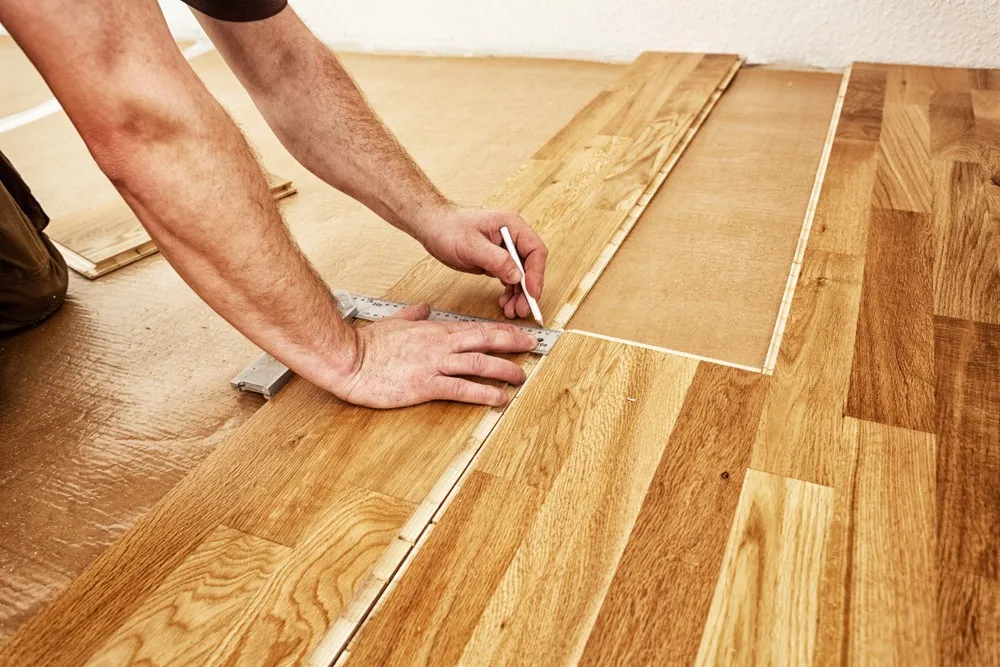
What is Engineered Wood?
Engineered wood (also called composite or manufactured wood) is a family of products made by bonding wood fibres, veneers, strands, or particles with adhesives under heat and pressure. Instead of using a single piece of lumber, multiple layers are combined to create boards, panels, and planks with higher dimensional stability and optimized performance for floors, furniture, doors, and structural elements.
In flooring, engineered wood typically has a real hardwood veneer on top and a core of plywood or HDF, so it looks like solid wood but behaves more predictably with humidity and temperature changes. In boards like plywood, MDF, OSB, and particle board, the layers or fibres are oriented to maximize strength, screw‑holding capacity, surface smoothness, or cost efficiency for different interior applications. Every home is ready for wall panelling, making your home bright and special today. Visit our store now.
Why Buyers Prefer Homes with Engineered Wood?
Homebuyers increasingly look for homes with engineered wood flooring and finishes because they deliver the visual richness of hardwood with better stability, lower maintenance, and a more attractive price point. In markets like India and the UK, demand for engineered wood flooring has grown as homeowners prioritize eco‑friendly, low-maintenance, and stylish materials that perform well in mixed climates.
Engineered wood floors enhance first impressions in living rooms, bedrooms, and hallways, which directly influences perceived property value and helps listings stand out on portals. Because these floors resist warping and gapping, they stay looking premium for years, reassuring buyers that they won’t face immediate replacement or high repair costs. Explore the most used customized blinds for your homes and offices in every condition.
Why is engineered wood attractive to buyers?
-
Premium look at better value: Offers the same natural grain and texture as solid hardwood but at a lower installed cost per square foot.
-
Stable in varied climates: Performs more reliably in humid, hot, or air‑conditioned environments, which is especially important in tropical and mixed‑climate regions.
-
Low maintenance lifestyle: Easy‑clean, durable finishes align with busy, urban homeowners who want stylish yet practical interiors.
-
Sustainability factor: Uses less slow‑growing hardwood and more fast‑growing species, aligning with eco‑conscious buyer preferences. Discover the best Sabyasachi Wallpapers for your home with extreme offers.
Types of Engineered Wood
1. Plywood- Plywood is made by gluing thin veneers (plies) of wood in alternating grain directions, creating strong, dimensionally stable panels used for flooring sub‑bases, furniture, cabinetry, and wall/roof sheathing.
2. MDF (Medium‑Density Fiberboard)
MDF is manufactured from wood fibres bonded with resin and pressed into dense, smooth panels ideal for painted furniture, cabinet fronts, and interior trims.
3. HDF (High‑Density Fiberboard)
HDF is similar to MDF but denser and stronger, produced under higher compression, making it suitable for laminate.
4. Particle Board / Chipboard
Particle board uses wood particles or chips and resin, pressed into panels that are lightweight and economical for low‑load furniture, wardrobe carcasses, and shelving.
5. OSB (Oriented Strand Board)
OSB is composed of oriented wood strands layered in specific directions and bonded with resin, providing uniform strength for subfloors, wall sheathing, and roof decking.
Benefits of Engineered Wood
Engineered wood delivers a combination of durability, design flexibility, and cost efficiency that solid wood and some alternative materials struggle to match. Its layered structure increases stability, while modern surface finishes make it more resistant to scratches, stains, and daily wear.
-
Dimensional stability: Cross‑laminated cores drastically reduce expansion, contraction, and cupping, making floors and panels more reliable in kitchens, basements, and air‑conditioned spaces.
-
Moisture tolerance: While not fully waterproof, quality engineered hardwood and certain board types have better moisture resistance than many solid wood products.
-
Design and comfort: Real wood surfaces bring warmth and acoustic comfort, reducing echo and making spaces feel more premium than ceramics or stone in many residential contexts.
-
Easy installation: Many engineered floors come with click‑lock systems, making them DIY‑friendly and faster to install over existing subfloors.
-
Cost and lifecycle value: Lower material and installation costs, plus reduced risk of failure, mean a better overall cost‑to‑value ratio.
FAQ's About Engineered Wood
Q1. Is engineered wood waterproof?
Engineered wood is generally moisture‑resistant rather than fully waterproof, and prolonged water exposure can still cause swelling or damage.
Q2. How long does engineered wood flooring last?
With correct installation and regular maintenance, good‑quality engineered wood flooring can last 20–30 years or more, depending on veneer thickness and finish quality.
Q3. Can engineered wood flooring be used with underfloor heating?
Many engineered wood products are compatible with radiant or underfloor heating because their layered structure handles temperature changes better than solid planks.
Q4. Do engineered wood boards expand like solid wood?
Engineered boards do expand and contract slightly, but the cross‑laminated or fiberboard core greatly reduces movement compared with solid hardwood.
Q5. What are common mistakes to avoid when buying engineered wood flooring?
Typical mistakes include choosing very thin wear layers to save cost, ignoring subfloor moisture conditions, skipping underlay, or selecting non‑certified, low‑quality products. Investing in reputable brands and professional installation reduces long‑term risks.
Conclusion
When you’re considering home upgrades that offer both beauty and long-term value, Engineered Wood should be high on your list. It comes with the style of hardwood and the convenience of current floor technology, making it perfect for homes.
From boosting curb appeal to increasing resale value, Engineered Wood proves itself as a smart, stylish, and durable choice for homeowners. If you are renovating for personal reasons or selling, this method of flooring pays off in recognizable ways.
So if you’re looking to add real value — both aesthetic and financial — to your home, Engineered Wood is a decision that stands the test of time.
Contact Panipat Handloom Emporium for the best wooden flooring.