

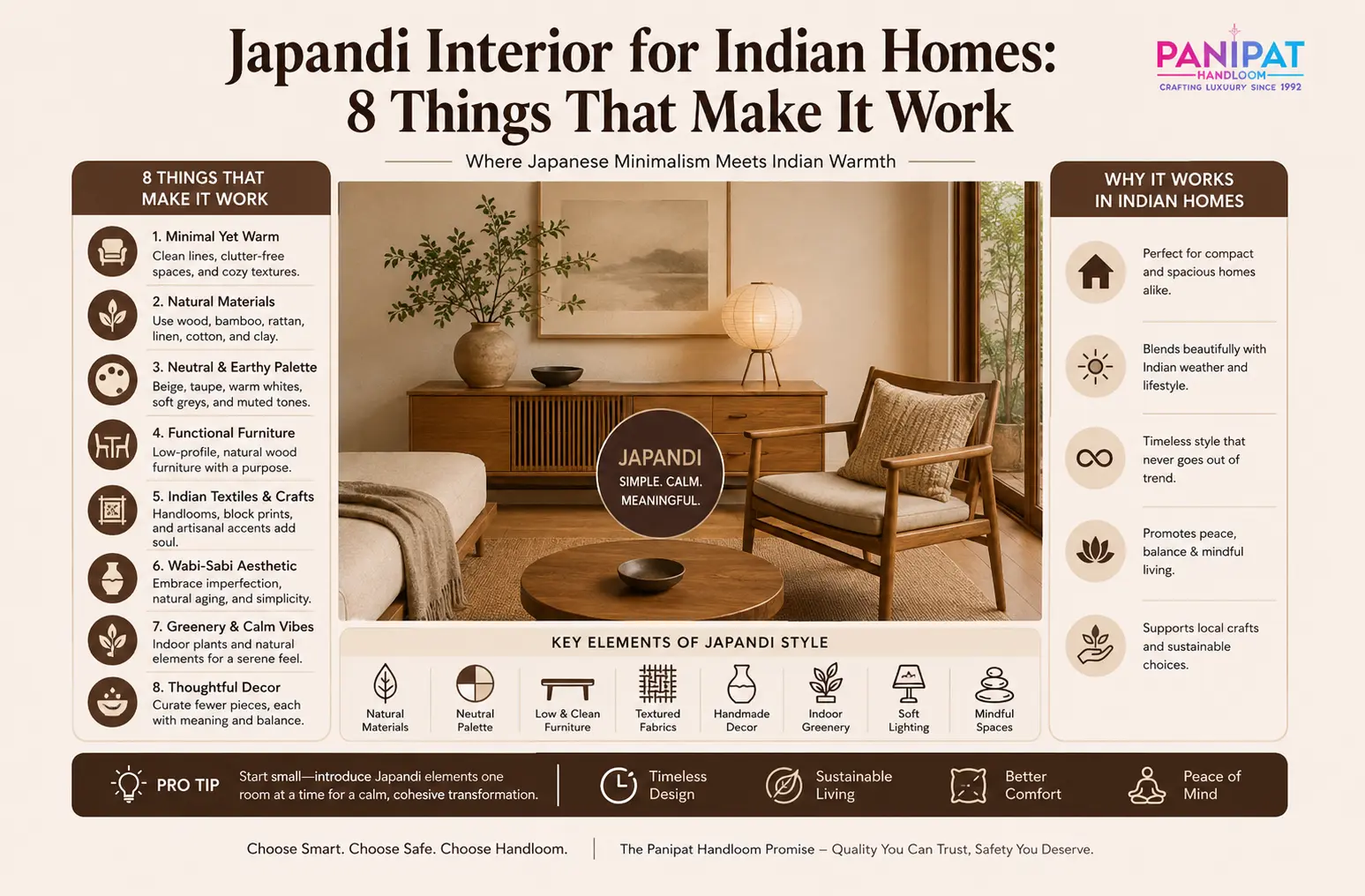
Japandi has gone from a niche Pinterest aesthetic to the most-requested design brief at our Delhi and Gurugram showrooms in 2026. It's not a fad. The Japanese-meets-Scandinavian blend of clean lines, natural materials and intentional warmth fits Indian homes better than most imported design styles for one simple reason. Indian craftsmanship already speaks the same language. Hand-block prints, terracotta, woven jute, hand-thrown ceramics and teak grain showing through honest finishes have been the bones of Indian interiors for generations. Japandi just provides a vocabulary to organise them.
The Panipat Handloom Interiors Team has helped specify Japandi-style homes across apartments in South Delhi, villas in Gurugram and rental flats in Dwarka. The pattern is consistent. Eight design choices do most of the heavy lifting.
Why Japandi Suits Indian Homes
Indian summers reach 45°C. Monsoons drop 70 percent humidity for weeks. Apartments in metro cities run small. Family life is dense with prayer corners, joint dining, kids' study areas and visiting relatives. Japandi addresses all of this. Natural breathable materials handle heat. Light colour palettes make small rooms feel larger. Functional minimalism keeps dense living organised. The wabi-sabi philosophy honours imperfection, which fits a country that values heirloom objects and hand-aged surfaces.
1. A Warm Neutral Palette
The Japandi colour base is warm rather than cool. Off-white, oat beige, soft taupe, muted clay, faded green and pale wood tones make the foundation. Avoid stark whites and cold greys. They photograph well but feel sterile in Indian sunlight. Layer two or three neutral tones across walls, curtains and upholstery. One darker grounding shade (deep brown, charcoal or ink) gets used sparingly as anchor on a TV wall accent, a low table or a single artwork. That's it.
2. Natural Materials Everywhere
This is the non-negotiable Japandi rule. Wood, linen, cotton, jute, rattan, bamboo and stone do the work. Plastic, polished metal and synthetic finishes break the look immediately. For Indian homes source locally. Indian teak ages beautifully. Cotton mills in Panipat produce linen-cotton blends that match imported Belgian linen at a fraction of the cost.
The Panipat curtain linen fabric range and Panipat cotton fabric range cover the curtain and upholstery side. The rattan cane range covers screens, wardrobe panels and bed headboards. Pair with bamboo charcoal veneer for warm woody wall accents.
3. Low-Profile, Intentional Furniture
Japandi furniture sits low and feels grounded. Sofas with exposed wooden legs, low coffee tables, dining tables at standard height but with simple visible joinery, beds without bulky padded headboards. Every piece serves a function. Decorative-only items get edited out.
In small Indian apartments this works particularly well. Low furniture visually expands the room. Exposed legs let light flow underneath, making spaces feel larger than they are. Multi-functional pieces like a bench that's also shoe storage or a coffee table with hidden storage inside earn their footprint.
4. Layered Natural Fabric Curtains
Curtains are where Japandi shifts from concept to actual room. The right specification is layered. A sheer linen or cotton at the window plus a heavier plain curtain that draws across when needed. Sheer for daytime softness. Heavier panel for night privacy and light blocking.
Avoid heavy patterns, shiny synthetics or anything in saturated colour. Stick to off-white, oat, sand, soft grey or muted clay tones. The sheer fabric range covers the inner layer. The Panipat plain curtains range and linen fabric collection cover the outer layer in matt Japandi-friendly textures. Skip elaborate pelmets. A clean wooden pelmet finish completes the look without visual noise.
5. Quiet Wall Treatments
Japandi walls don't shout. The most common treatment is a soft textured paint or limewash in a neutral tone. For accent walls, two options work consistently well in Indian Japandi homes.
Slat or fluted wood panelling in a light oak or warm pine finish adds rhythm without colour. The wall panelling range covers slat profiles that suit Japandi specifications. For more textural depth, thermo pine cladding panels deliver the warm-wood look authentic to both Japanese and Scandinavian traditions.
Subtle textured wallpaper in neutral tones. Linen-look, grass-cloth or paper-weave effects work. Skip bold patterns. The whole point is to recede, not feature.
6. Wooden or Bamboo Flooring
Hard tile and polished marble undermine Japandi. The look needs wood grain underfoot. For Indian homes, the practical choices are engineered wood flooring (handles humidity better than solid wood) and bamboo flooring (sustainable, warm-toned, durable). Both deliver the visual softness Japandi requires.
The engineered wooden flooring range covers light oak, white oak and pale walnut tones that suit Japandi perfectly. The bamboo flooring range offers an authentic Japandi match and works exceptionally well in Indian climate conditions. For rooms where wood isn't feasible, large neutral area rugs in jute, sisal or wool bridge the gap over existing tile flooring.
7. Hand-Crafted Touches (The Indian Wabi-Sabi)
This is where Indian homes get Japandi naturally. Wabi-sabi (the Japanese philosophy of finding beauty in imperfection) is essentially what Indian homes have always done with hand-block prints, terracotta planters, hand-thrown pottery and woven mats. Lean into this.
Use one or two hand-block printed cushions on a plain sofa. A terracotta planter with a single peace lily. A hand-woven jute or seagrass mat under a low coffee table. A clay diya or stone lamp. Each piece should feel like it has a story. Avoid identical-looking mass-produced decor. Three handmade items beat thirty factory items every time.
8. Hidden Storage and Visual Calm
The final Japandi rule. Keep everything off the surfaces. Closed wardrobes, drawer storage under benches, kitchen appliances tucked into cabinets, mandir designs with concealed storage for daily prayer items. The visible surfaces (countertops, shelves, low tables) should be 80 percent empty.
Indian homes generate a lot of stuff. Daily mail, electronics chargers, prayer items, festival decorations, school supplies, kitchen gadgets. Japandi doesn't ask you to own less. It asks you to hide what you own. Built-in storage solutions during initial fit-out save the visual battle later.
Key Takeaways
Japandi suits Indian homes because the principles (natural materials, warm neutral palettes, functional minimalism, handcrafted touches) overlap heavily with traditional Indian design values. The 8 elements that make it work are a warm neutral colour palette, natural materials, low-profile furniture, layered natural fabric curtains, quiet wall treatments, wooden or bamboo flooring, hand-crafted Indian touches as wabi-sabi and hidden storage for visual calm. Source locally for cost and authenticity. Skip stark whites and saturated colours. Indian summer climate handles the natural breathable materials Japandi requires beautifully.
The Final Word
Japandi for Indian homes isn't about importing Tokyo or Copenhagen. It's about taking the discipline of those design traditions and applying it to materials and craftsmanship that already exist in India. Hand-woven mats from Kerala. Terracotta from Rajasthan. Cotton-linen from Panipat. Teak from Karnataka. The aesthetic is global but the supply chain is local, which is exactly what makes the look feel rooted rather than imported.
The Panipat Handloom Interiors Team handles fabric, panel, flooring and wall treatment specifications for Japandi-style homes across Delhi NCR. Walk in to our N-14 South Extension Part 1 store in New Delhi or the Dharam Plaza store in Sector 62 Gurugram for sample mood boards.
Frequently Asked Questions
Q: What is Japandi interior design in simple terms?
Japandi is a hybrid of Japanese minimalism and Scandinavian functionality. It combines clean lines, low-profile furniture, natural materials, warm neutral colours and intentional decluttering. The goal is calm, functional and warm interiors that feel grounded rather than sterile.
Q: Does Japandi work for Indian homes?
Yes, Japandi works particularly well for Indian homes because its core principles overlap with traditional Indian design values. Natural materials handle Indian climate well. Hand-crafted touches align with India's wabi-sabi sensibility through hand-block prints and terracotta. Functional minimalism suits compact urban apartments common in Delhi NCR and other metro cities.
Q: What colours are used in Japandi homes?
Japandi palettes use warm neutrals like off-white, oat beige, soft taupe, muted clay, faded green and pale wood tones. Darker grounding shades like deep brown, charcoal or ink are used sparingly as accents. Stark whites, cold greys and saturated colours are avoided because they break the warm intentional feel.
Q: What is the best flooring for a Japandi Indian home?
Engineered wooden flooring and bamboo flooring are the best Japandi options for Indian homes. Engineered wood handles humidity better than solid wood. Bamboo offers an authentic Japanese-style aesthetic and performs well in Indian climate. Both deliver the warm wood-grain look Japandi requires underfoot.
Q: How do I make my Indian home Japandi without a full renovation?
Start with three changes that compound visually. Layered natural fabric curtains (sheer plus plain), a soft neutral paint refresh on one feature wall and a single low coffee table or accent piece in honest wood. Add hand-block printed cushions and a jute rug. Avoid stark whites. Source local materials for cost and authenticity.
Contact for site visit and quote:
- Delhi store: N-14, South Extension Part 1, New Delhi-110049
- Gurugram store: Shop No 3, Plot No 101A, First Floor, Left Side, Dharam Plaza, Brahma City, Sector-62, Gurugram, Haryana-122101
- Phone: +91-9899073000, +91-9999999009