

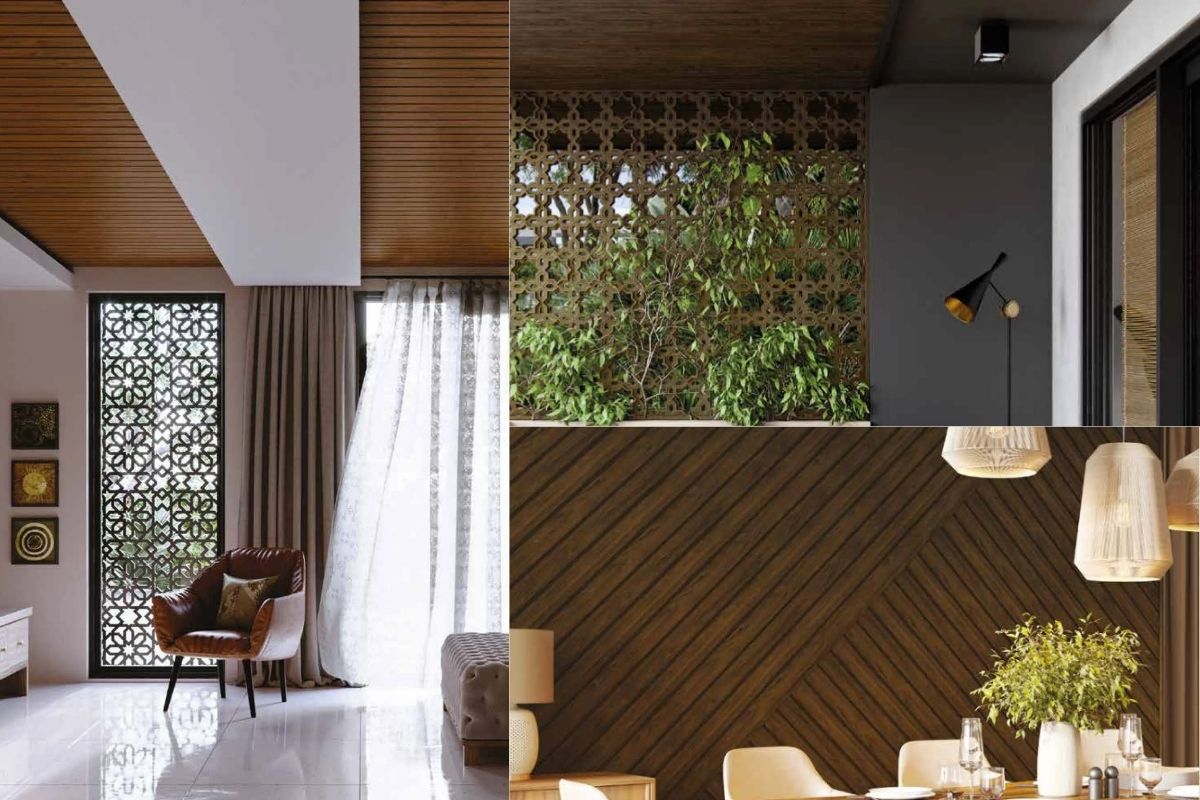
What Is a Louvers Ceiling Panel?
A louvered ceiling system comprises linear or slat profiles (louvers) installed with spaces created between them for various patterning offers an open or semi-open ceiling space. The slats can be constructed from aluminum, WPC, PVC, wood, or charcoal composite material and are attached to a supporting grid or framework. They are broadly employed in modern interiors to encompass the aesthetic dimension with practical advantages like airflow, keeping services out of sight, and combining lighting. Transform plain walls into statement features—explore our Charcoal Wall Louvers and buy the look today.
Benefits of Louvers Ceiling Panels Design
- Architectural Depth: Repeating louver patterns create a clean visual rhythm that makes spaces look more structured, wider, and modern.
- Acoustic Management: Random lines generate fire to rhythm and direction, making narrow spaces feel elongated and short ceilings look taller. Holes in the slats release episodes of small, small parts, thus reducing reverberation, an invaluable asset for family rooms or theaters.
- Integrated Lighting: You can easily nestle LED strips or spotlights between the slats for a seamless, "hidden" light source.
- Accessibility: False ceilings in general are harder to remove than Louver panels; for maintenance purposes, that is. For that thing they need many gaps for running wires and pipes.
Types of Louvers Ceiling Panels
1. Linear louvers: Long, continuous strips used in corridors, lobbies, and living rooms.
Key Features
- Sleek, minimalistic design.
- Installed in evenly spaced linear formations.
- Allows controlled airflow and light distribution.
- Can conceal wiring, ducts, and HVAC systems.
- Creates an illusion of height and openness.
2. Box or baffle louvers: Deep, vertical fins that create a strong architectural effect and improve acoustics.
Key Features
- Hanging rectangular blades (baffles).
- Provides depth and dimensional aesthetics.
- Improves acoustic performance by reducing echo.
- Allows maximum air circulation.
3. WPC louvers: Wood-plastic composite profiles used for warm, wood-like ceilings with low maintenance.
Key Features
- Wood-like finish with modern strength.
- Resistant to moisture, termites, and warping.
- Eco-friendly and recyclable material.
- Ideal for warm, natural interior aesthetics.
4. PVC louvers: Lightweight, budget-friendly louvers ideal for residential ceilings and utility spaces.
Key Features
- Extremely lightweight and easy to install.
- Resistant to moisture and corrosion.
- Budget-friendly alternative to metal or wood.
- Available in multiple colors and finishes.
5. Metal (aluminum) louvers: Highly durable, fire-resistant, and perfect for commercial or high-traffic interiors. Transform your walls into a statement of luxury with Sabyasachi Wallpapers—explore the collection now.
Key Features
- Made from powder-coated or anodized aluminum.
- Fire-resistant and highly durable.
- Corrosion-resistant, even in harsh environments.
- Can support large-span installations.
Materials Used in Louvers Ceiling Panels Design
- Aluminum: One of the most widely used materials for louvers and ceilings due to its features of strength, corrosion resistance, and fire resistance.
- WPC (Wood Plastic Composite): Made from a composite of wood fibers and thermoplastic, which very much conveys a wooden look with the necessary moisture, termite, and UV-light resistance.
- PVC: Light, plastic, and affordable; certainly lightweight, specifically for easy installation, it is used mostly in residential ceilings or utility areas.
- Charcoal composite panels: When wooden decorative panels are fireproof, the latter quality is normally utilized in constructing high-end interior silhouettes.
- Solid wood: WPC is mostly waterproof and better in hot or very cold climate conditions, but it leaves enough gapping as the boards expand and contract.
Material Comparison Table
|
Material |
Durability |
Moisture Resistance |
Fire Performance |
|
Aluminum |
Very high |
High |
Good to very good.prancebuilding |
|
WPC |
High |
Very high |
Good flame resistance.advancelam |
|
PVC |
Medium |
High |
Needs proper rating |
|
Wood |
Medium |
Low–Medium |
Depends on treatment |
|
Charcoal |
High |
High |
Varies by brand.venturaindia |
Where Can You Use Louvered Ceiling Panels?
- Living rooms: To frame the TV area, create a zone over the seating, or add a premium hotel lobby feel.
- Bedrooms: As a feature over the bed, combined with indirect lighting.
- Corridors and lobbies: Long corridors look less boring with directional linear louvers.
- Offices: For open ceilings that still hide services while improving acoustics and controlling light.
- Retail and hospitality: In showrooms, cafés, and reception areas to create a distinct brand atmosphere. Add the perfect finishing touch to your windows with our stylish Curtains Borders—designed to elevate simple curtains into a luxurious statement
Louvers Ceiling Panels vs False Ceiling
|
Feature |
Louvers Ceiling Panels |
Typical False Ceiling (Gypsum/POP) |
|
Visual style |
Open, linear, textured look. |
Flat, continuous, or geometric. |
|
Ventilation |
High airflow through gaps. |
Lower, more enclosed. |
|
Service access |
Easy (removable panels). |
Limited; often needs cutting. |
|
Light integration |
Great with linear/indirect lighting. |
Excellent with spot and recessed lights. |
|
Best use |
Modern, semi-open, premium ceilings |
Standard residential and office ceilings |
Advantages of Louvers Ceiling Panels
- Modern aesthetics: Instantly makes interiors look premium and architect-designed.
- Climate comfort: Better cooling and comfort in warm climates by allowing hot air to rise and escape or circulate.
- Versatile materials: From WPC to aluminum, you can match your budget, usage, and style.
- Durability: Good quality louvers (WPC, aluminum, charcoal) resist warping, termites, and moisture better than raw wood.
- Flexible application: Works in homes, offices, hospitality, retail, and even semi-outdoor areas with the right material.
Common Mistakes to Avoid When Buying Louvers Ceilings
- Ignoring the "Gap" Ratio: If the slats are too far apart, you’ll see the messy wires above. If they are too close, you lose the "depth" effect.
- Poor Lighting Planning: Don't wait until the ceiling is up to think about lights. Louver carriers need to be spaced to accommodate your fixtures.
- Wrong Material for Humidity: Avoid natural wood in bathrooms; stick to Aluminum or WPC to prevent warping.
How to Choose the Right Louvers Ceiling Design
- Define the location
- Indoor dry area: Living rooms, bedrooms can use WPC, PVC, charcoal, or wood.
- Humid or semi-outdoor: Choose WPC or aluminum for better moisture resistance.
- Decide your design goal
- Warm and cozy: Wood or wood-look WPC in natural tones.
- Sleek and industrial: Aluminum in white, grey, black, or metallic finish.
- Luxury: Charcoal louvers with rich textures and LED lighting.
- Check performance requirements
- Need better fire safety and longevity: Aluminum or certified WPC panels.
- Need easy cleaning and low maintenance: WPC, PVC, and powder-coated metal.
- Align with your budget
- PVC is usually most affordable; WPC and aluminum sit mid to high, depending on brand and finish.
- Choose a reliable brand/installer
- Look for manufacturers offering coating warranties, fire ratings, and proper installation systems.
Louvers Ceiling Panels Prices
Visit our official website for Dream Mattress price list (dreams gadda), The Panipat Handloom, or visit our showroom at N-14, South Extension Part 1, New Delhi-110049, and 9, Shop No. 3, Plot No. 1014, First Floor, Left Side, Dharam Plaza, Brahma City, Sector-62, Gurugram, Haryana-122101. Our team will help you with all the details.
FAQ’s About Louvers Ceiling Panels
Q1. Are louvers ceiling panels good for ventilation?
Yes, their open design allows hot air to move and improves natural or mechanical ventilation compared to fully sealed ceilings.
Q2. Which material is best for louvers ceiling design in homes?
For most modern homes, WPC and PVC are popular due to their wood-like appearance, durability, and low maintenance; aluminum is ideal for higher fire and durability needs.
Q3. Are Louver ceilings designs waterproof?
Aluminum and WPC Louvers are highly moisture-resistant, making them perfect for balconies and semi-outdoor areas.
Q4. Are louvers ceiling panels fire-resistant?
Aluminum louvers and many quality WPC systems meet specified fire performance ratings; always check the fire rating and certifications of the product you plan to use.
Q5. Can louvers ceiling panels be used only on ceilings?
No, many louver profiles are also used on walls, as room dividers, façade elements, and feature panels.