

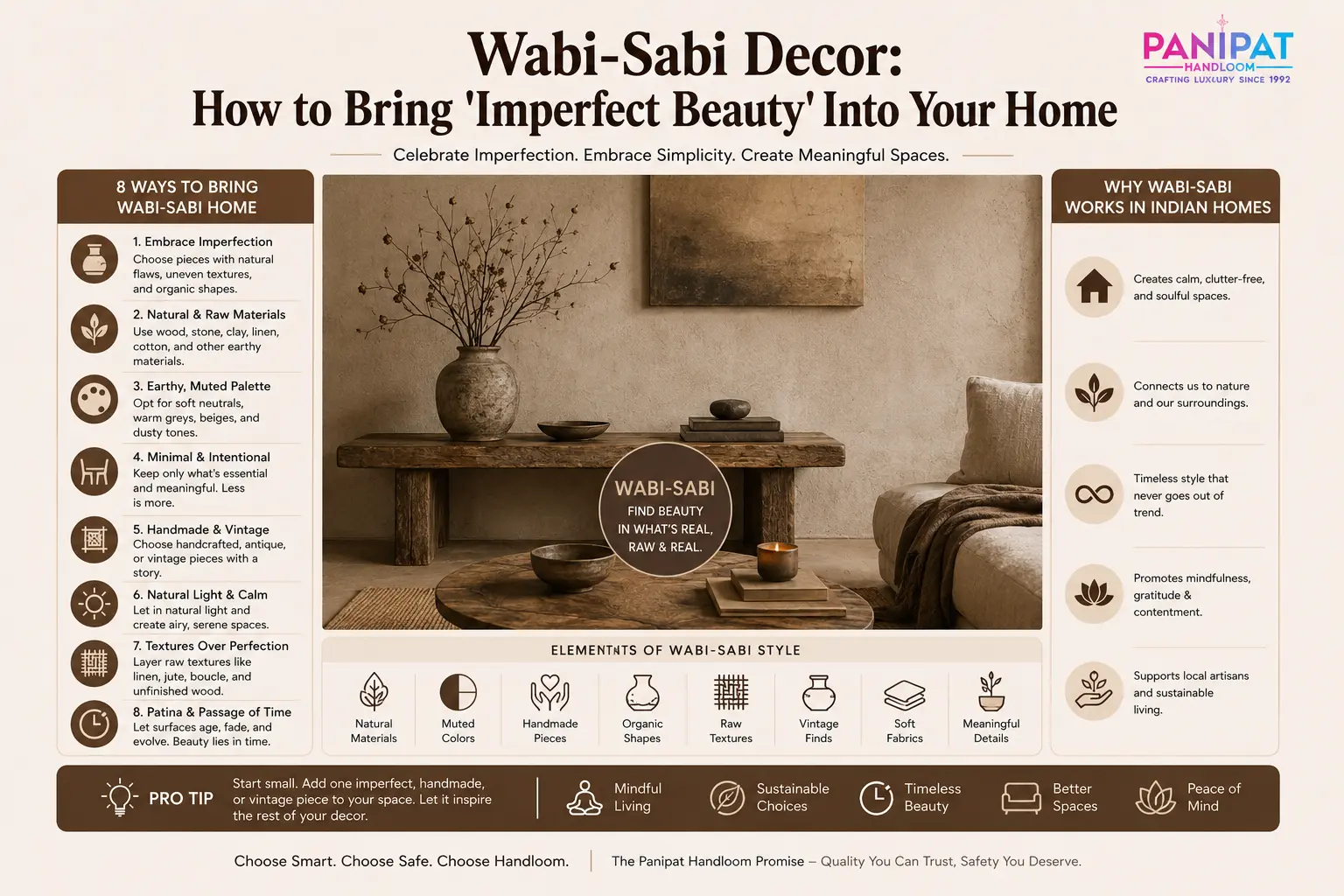
Wabi-sabi is the Japanese design philosophy that says a chipped clay pot is more beautiful than a perfect porcelain one. Not because it's old or cheap, but because the chip tells a story. The crack catches light differently. The asymmetry feels human. After years of glossy Pinterest-perfect interiors dominating Indian design, wabi-sabi is having a real moment in Delhi and Gurugram homes for one reason. People are tired of houses that look like showrooms and want spaces that feel lived-in, calm and quietly soulful.
The Panipat Handloom Interiors Team has noticed the wabi-sabi brief showing up more in 2026 consultations, especially from younger homeowners and second-home buyers. This guide breaks down what wabi-sabi actually means and seven practical ways to bring imperfect beauty into your living space.
What Wabi-Sabi Actually Means
Wabi-sabi is a Japanese aesthetic philosophy rooted in Zen Buddhism. Wabi refers to humility, simplicity and the beauty of things that are subdued or austere. Sabi refers to the patina of age, the beauty that develops in objects as they weather and acquire history.
Together they form a worldview that finds beauty in three qualities. Imperfection (cracks, irregularities, asymmetry). Impermanence (fading fabrics, silvering wood, patinated brass). Incompleteness (negative space, rooms that don't try too hard). A related concept worth knowing is kintsugi. The Japanese art of repairing broken pottery with gold-laced lacquer that highlights the repair rather than hiding it. Repair is not shame. Repair is history made visible.
Why Indian Homes Already Have Wabi-Sabi DNA
Indian homes have practised wabi-sabi for centuries without naming it. The hand-block printed bedcover passed down from a grandmother. The brass diya darkening with use. The clay matka sweating in the kitchen. The wooden door frame worn smooth by generations of hands. Hand-loomed dhurries with intentional irregularities. Kantha quilts mended with visible stitches over decades. Indian design traditions never aimed for perfection. They aimed for honesty. That instinct aligns so naturally with wabi-sabi that adopting it in an Indian home is less about importing a look and more about giving permission to keep what was already meaningful.
7 Ways to Bring Wabi-Sabi Into Your Home
1. Choose Natural Fabrics That Age Well
Wabi-sabi fabrics get more beautiful with time. Pure linen, raw cotton, hand-loomed silk and unbleached wool develop a softness that synthetic fabrics never achieve. Use them for curtains, upholstery, bed linen and cushions. The Panipat curtain linen fabric range and linen fabric collection deliver the textured drape that catches Indian afternoon light beautifully. For upholstery, the pure cotton fabric range offers the natural texture wabi-sabi requires. Skip shiny synthetics. They never develop patina, they just wear out.
2. Embrace Earthy, Muted Colour Palettes
Wabi-sabi colour is borrowed from nature. Clay terracotta, warm sand, oat beige, stone grey, sage green, mushroom brown and lime-washed white. Avoid saturated colours, glossy paints and stark contrasts. Lime-wash and matt finishes work best because they show subtle tonal shifts as light moves across the wall through the day. For accent surfaces, bamboo charcoal veneer and warm natural wood panelling deliver the woody depth wabi-sabi rooms need without going designer-slick.
3. Use Furniture With Honest Materials
Wabi-sabi furniture shows what it's made of. Solid wood with visible grain and knots. Stone with veining. Linen-upholstered seating without rigid tailoring. Cane and rattan with handmade weave irregularities. Skip lacquered finishes and printed laminates because they hide the material story. The rattan cane range covers wardrobe panels, headboards and screens with the natural weave texture wabi-sabi calls for. For flooring with visible grain, the hard wood flooring range and engineered wooden flooring range show authentic wood character rather than printed simulation.
4. Curate Hand-Made Objects Over Mass-Produced Ones
This is the wabi-sabi rule that matters most. Three handmade objects beat thirty factory-perfect items. A hand-thrown ceramic vase with a visible thumbprint. A wooden bowl with grain irregularities. A copper urli darkening at the rim. A clay matka used as a side table. Each should show visible evidence of the human hand that made it. This is also where Indian craft traditions shine. Channapatna wooden toys. Khurja pottery. Moradabad brassware. Block-printed Sanganeri cushions. All carry the wabi-sabi quality of being made one at a time by people, not machines.
5. Let Light and Shadow Do the Decorating
Wabi-sabi rooms are not brightly lit. Harsh overhead lighting flattens everything. Soft side lighting from floor lamps, table lamps and pendant lights creates the play of light and shadow that wabi-sabi celebrates. Pull the curtain halfway open at the right time of day and the room half-shadows itself into a moment. Use sheer linen or cotton curtains to filter daylight gently. The sheer fabric range and Panipat plain curtains range work particularly well in wabi-sabi specifications because they soften light without darkening rooms.
6. Honour the Negative Space
Empty space is not wasted space in wabi-sabi. A shelf with two carefully chosen objects beats a shelf packed with decor. A wall with one piece of art beats a gallery wall. A coffee table with a single hand-thrown bowl beats one piled with coasters and remotes. Indian homes tend to fill every surface with cushions, coasters, photo frames and decor pieces. Wabi-sabi asks you to remove half. The room breathes. The objects that remain matter more. Closed storage becomes important here so daily clutter has somewhere to go.
7. Layer Plants and Dried Elements
Wabi-sabi rooms include nature without trying to bring the garden indoors. One large potted plant in a clay pot. A small bonsai. A vase of dried pampas grass. A bowl of pinecones or rough stones from a trek. Avoid plastic flowers and identical-looking decorative items. If a real plant is impractical, the artificial bonsai range offers a wabi-sabi-friendly compromise. Dried elements (which actually fade and change over time) work beautifully and need no maintenance.
Wabi-Sabi vs Japandi: The Honest Comparison
The two styles get confused often. Here's the difference.
|
Aspect |
Wabi-Sabi |
Japandi |
|---|---|---|
|
Origin |
Pure Japanese (Zen Buddhist) |
Japanese plus Scandinavian |
|
Aesthetic |
Patina, age, irregularity |
Clean lines, refined minimalism |
|
Finishes |
Raw, unfinished, weathered |
Smooth, intentional, polished |
|
Furniture |
Antique or handcrafted |
New but minimalist |
|
Mood |
Quietly soulful, lived-in |
Calm, ordered, fresh |
|
Best for |
Heirloom-style homes, second homes |
Modern apartments, new builds |
The two combine well. Many of the best Indian homes blend Japandi structure (clean layout, ordered storage) with wabi-sabi details (handmade ceramics, aged wood, linen drapes). The structure comes from Japandi. The soul comes from wabi-sabi.
Common Mistakes
Confusing wabi-sabi with shabby chic. Wabi-sabi is restrained and minimalist. Shabby chic is decorative and busy. They share an interest in age but the philosophies are opposite.
Buying "distressed" furniture from chain stores. Manufactured-distressed finishes are the opposite of wabi-sabi. The look is too uniform, too intentional. Real wabi-sabi pieces are one of a kind and genuinely aged.
Going too rustic. Wabi-sabi is not farmhouse style. It can sit comfortably in a modern home with sleek architecture. The contrast is part of the appeal.
Filling the space. Adding more wabi-sabi pieces doesn't make a room more wabi-sabi. Restraint matters more than collection.
Key Takeaways
Wabi-sabi celebrates imperfection, impermanence and incompleteness as sources of beauty. Indian homes already have wabi-sabi DNA through hand-block prints, brass darkening with use, aged teak and handwoven textiles. The 7 practical moves are natural fabrics that age well, earthy muted palettes, honest material furniture, hand-made objects, soft light and shadow play, honoured negative space and layered plants or dried elements. Wabi-sabi differs from Japandi mainly on finishes (raw and patinated vs smooth and refined). The two combine well in Indian homes. Restraint always beats collection.
The Final Word
Wabi-sabi isn't a style you buy. It's a way of choosing what to keep. The terracotta pot your mother passed down. The wooden chair your father sat in. The brass lamp that's darkened over twenty years. These are not items to replace with newer versions. They are the bones of a wabi-sabi home. The job of design is to give them space, soft light and time to age further.
The Panipat Handloom Interiors Team helps specify the fabric, panel and flooring side of wabi-sabi homes across Delhi NCR. Walk in to our N-14 South Extension Part 1 store in New Delhi or the Dharam Plaza store in Sector 62 Gurugram for sample mood boards.
Frequently Asked Questions
Q: What is wabi-sabi in interior design?
Wabi-sabi is a Japanese design philosophy that finds beauty in imperfection, impermanence and incompleteness. In interior design it translates to natural materials, earthy colour palettes, handcrafted objects, visible age and wear and quiet restraint instead of decorative excess.
Q: How is wabi-sabi different from Japandi?
Wabi-sabi celebrates patina, age and visible irregularity. Japandi prefers clean lines and refined minimalism. Wabi-sabi keeps the chip in the bowl. Japandi prefers the bowl perfectly intact but minimally styled. Wabi-sabi has more soul. Japandi has more order. The two combine well in many homes.
Q: Does wabi-sabi work for Indian homes?
Yes. Indian homes have practised wabi-sabi principles for centuries through heirloom objects, hand-block prints, aged brass, terracotta, handwoven dhurries and lime-washed walls. Indian craft traditions align naturally with the wabi-sabi philosophy of valuing the handmade over the perfect.
Q: What colours are used in wabi-sabi homes?
Wabi-sabi palettes use earthy and muted tones drawn from nature. Clay terracotta, warm sand, oat beige, stone grey, sage green, mushroom brown and lime-washed white are the typical choices. Saturated colours, glossy paints and stark contrasts are avoided.
Q: How do I start a wabi-sabi home without redoing everything?
Start with three things. Swap synthetic curtains for linen or cotton. Add one hand-thrown ceramic piece on display. Remove half the decorative objects from your most cluttered surface. These three moves shift the room's mood within a day and let you build from there.
Contact for site visit and quote:
- Delhi store: N-14, South Extension Part 1, New Delhi-110049
- Gurugram store: Shop No 3, Plot No 101A, First Floor, Left Side, Dharam Plaza, Brahma City, Sector-62, Gurugram, Haryana-122101
Phone: +91-9899073000, +91-9999999009